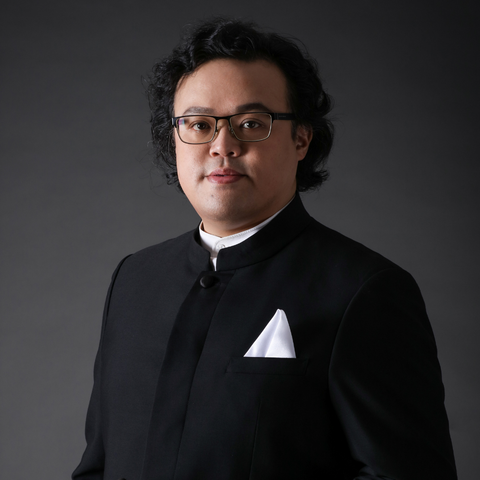
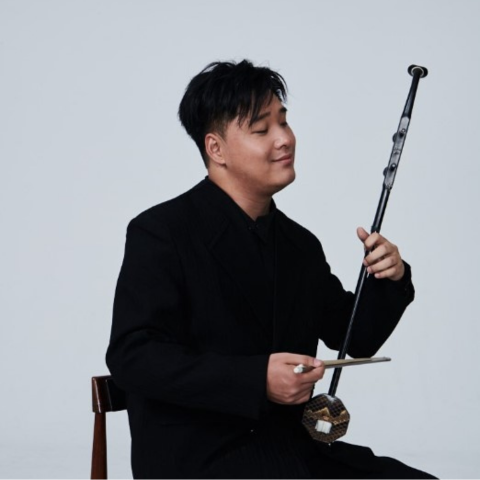
Dishui Nanyin Words of the Blind Yang Enhua
Words of the Blind is an original work composed in the style of Deshui Nanyin by Yang Enhua. Based on the
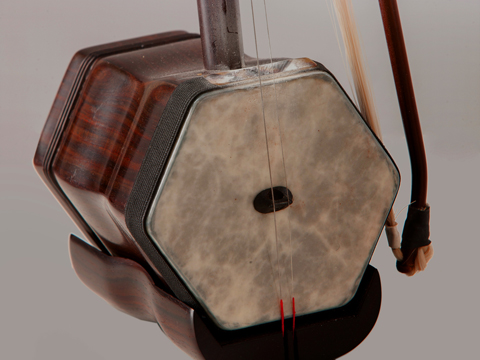
artist’s real-life experience of practising the erhu in a public park, it tells the story of a visually impaired performer who is mistaken for a beggar by passers-by. Given money and spoken to condescendingly, the musician engages in a street debate.
The lyrics unfold in plain, colloquial language, moving from the pity and disdain of the passer-by to the calm,
reasoned response of the visually impaired musician, gradually conveying its core message: people with disabilities do not live solely on charity and sympathy. Through diligent practice and artistic expression, they uphold dignity and pursue their passions just like anyone else.
Through this street conversation, the work clarifies the true meaning of inclusion: it is not a condescending gift from mainstream society, but mutual understanding and companionship built on equality and respect. The piece ends with the music resuming and the passer-by leaving in shame, calling on the public to set aside prejudice, practise empathy, and achieve genuine equality and inclusion.
Erhu Solo Farewell Sun Wenming
Farewell was composed in the spring of 1957 and fashioned to mimic the sound of a small Cantonese ensemble. Sun Wenming played this piece at the end of the tea house recitals to express his gratitude to the audience, hence the title. The composition is spirited and joyful, expressing genuine and poignant sentiment.
Erhu Solo Reflection of the Moon on the Water Hua Yanjun Orch. by Ding Guoshun
Reflection of the Moon on the Water is an erhu piece by renowned folk musician Hua Yanjun. It features a graceful melody and a profound bleakness, surges with emotion and then returns to stillness as it chases the moon and the clouds, full of longing for the future.
The piece is the most representative work of Hua Yanjun, also known as ‘A Bing’. He lost his eyesight
when he was thirty-five (in 1928) and was eventually reduced to becoming a street musician. He experienced great injustice and all the hardship in low life and was much bullied. Reflection of the Moon on the Water is a picture of Hua’s mind, and the composer calls it The Tune of the Heart.
In the summer of 1950, Yang Yinliu and Cao Anhe, two famous musicologists, recorded Hua’s performance
of the work. They suggested that the piece be named after the ancient springs at the bottom of Huiquan Mountain in Wuxi. Hua agreed and the work has since been known as Reflection of the Moon on the Water.
Five-piece Combo Autumn Moon on a Placid Lake Lui Man-shing
This is a famous piece originally written by Lui Man-shing in the early 1930’s. The lyricism and the musicality of the music have made it widely popular. The present arrangement incorporates movement into the quiet mood for an even more poignant aesthetic touch: the scene of a peaceful lake on an autumn evening, with the mirror-like water reflecting the moon, instills tranquility in the heart of the beholder and inspires transcendental thoughts. It was named one of the “20th Century Chinese Music Classics”.
Huqin Quartet Ru-Meng-Ling Yang Chunjia
“Last night there was scattered rain but gusty winds,
I slept tight yet woke up with a slight hangover.
I asked the one rolling up the blinds,
who replied, the cherry apple blossoms looked the same.
Alas, don’t you know? Don’t you know?
It should be a scene of plush green and sparse red.”
This is a ci poem by the Song poetess, Li Qingzhao (1084-1155), entitled Ru-Meng-Ling (Lyrics to a Dreamy Chant). The present eponymous work for huqin quartet is inspired by the ambience suggested in the poem. The instruments used are one gaohu, one zhonghu and two erhu.
Written in pentatonic scale typical of Chinese music, each instrumental part would deliver its own interpretation of the theme. The result is an ensemble piece of Chinese classical charm, which is rich in timbre and ethereal in ambience. The work was premiered at the erhu ensemble concert, Yang Xue and "Bows and Strings’ Dance” in 2011.
String Quintet Three Variations on Yangguan Ancient Tune Arr. by Hu Dengtiao
The music, originally written for Guqin, is based on a work by Wang Wei, a poet of the Tang Dynasty. In the poem, the poet expresses his sorrow at having to depart and leave his friend behind.
In the original, the theme is played in three different ways, hence, it is known as “Three Variations”.
Here it is arranged for a quintet and the employment of more musical instruments helps to enhance the sentiment of the original theme.
String Quintet A Joyful Evening Hu Dengtiao
Developed and introduced by Hu Dengtiao, this string quintet is considered very innovative in Chinese
music.
This song was composed in 1980. The melody is played in quick tempo with the introduction played on yangqin in an air of mystery. As the other instruments come into play, the dynamic gradually strengthen. The thematic line in simple rhythm is refined. Amidst the fervent cadence, ingenious playing techniques are employed for erhu, yangqin and pipa, such as extended glissando, harmonic and striking the sound-box and the resonator of the instruments. In boisterous atmosphere the hectic music is brought to a climax.
Eternal Night Tam Yat-sing
Eternal Night, or Polar Night, occurs at the Earth’s polar regions during winter as the sun dips below the horizon and becomes invisible for an extended period.
Inspired by this phenomenon, the first sections of this composition imagines people living in a dark, cold, and lonely place, and the negative emotional effects that could result. The final movement draws from the writings of Lu Xun, “give off warmth and light, like fireflies glowing in the darkness, without waiting for a torch to be passed”, perhaps hoping for a sliver of dawn to appear.
Seeking (The Third Movement of The Desert Smoke Suite) Zhao Jiping
The work is the third movement of the dance drama, The Desert Smoke Suite. As the music develops, the mood changes from calm, contrasts, to conflicts, illustrating the tension and undulations one feels in the heart and the perpetual seeking of the ideal world.
Luminous Sound Journey Luk Wai-chun
(Co-commissioned by “No Limits” and HKCO / World Premiere)
Luminous Sound Journey is a Chinese orchestral composition commissioned by No Limits (Hong Kong Arts Festival) and Hong Kong Chinese Orchestra, written exclusively for this concert.
In the world of the visually impaired, sound becomes light—illuminating the path and guiding the way. During the creative process, the composer engaged with several visually impaired individuals, listening to their stories and discovering that, for them, travel is an experience embraced through sound, with soundscapes painting the colors of distant lands. Inspired by this, the composer weaves a musical journey that invites both audience and visually impaired travelers to embark on an extraordinary voyage beyond borders.
The piece begins with the familiar soundscape of Hong Kong, then rides the waves across the sea, dives into the depths to dance with dolphins, and gallops across vast grasslands—sound serving as the traveler’s compass. Yet midway, silence suddenly descends. The traveler is lost in darkness, gripped by confusion and
anxiety, overwhelmed by fear and longing. Then, sound returns like a beam of light at dawn, rekindling courage and guiding the traveler forward toward a sky ablaze with colors. In its final moments, sound and light swirl like the wind, gently brushing the soul and leading the traveler into an endless horizon.